



EP 76 | DAVID HEALY | THE ANTIDEPRESSANT DECEPTION
Nick Fortino and renowned psychiatrist Dr. David Healy look at modern psychiatry and psychopharmacology. Dr. Healy, a vocal critic of the pharmaceutical industry's influence, exposes how the "serotonin myth" emerged from marketing, reveals how antidepressants (SSRIs) can blunt emotions and cause iatrogenic harm, and discusses the public health crisis of long-term drug use, urging a reevaluation of mental healthcare, especially for children.

EP 75 | JENNIFER GIORDANO | CONVENTIONAL PSYCHIATRY IS UNSCIENTIFIC
Psychiatrist talks about her experience in psychiatry residency, how she questioned the belief system she learned, and her process of redefining her treatment approach. She highlights the glaring misconceptions that justify the default mode of practice in psychiatry. And she shares her insight on how to safely withdraw from psychiatric drugs.

EP 72 | JOANNA MONCRIEFF | DEPRESSION IS NOT A CHEMICAL IMBALANCE
Dr. Moncrieff's 2022 umbrella review of the serotonin theory of depression became one of the most widely read and influential papers of modern times, ranking in the top 5% of all scientific papers ever written. In light of the extreme interest, Dr. Moncrieff wrote a new book--Chemical Imbalance: The Making and Unmaking of a Serotonin Myth. She joins the podcast to share her discoveries and analyses.

EP 69 | NICHOLAS CHRISTAKIS | OUR PSYCHOLOGICAL BLUEPRINT
Dr. Nicholas Christakis is a Sterling Professor of Social and Natural Science at Yale. He is known for his research on the influence of social networks in determining behaviors and health phenomena in human populations. He explores how social factors affect biological and social functioning, illustrating that behaviors like smoking, happiness, and obesity can spread through social ties. Christakis also delves into the biological and evolutionary basis for why humans form social networks and how these structures affect individuals and societies. He joins Nick for a conversation about his work, particularly the insight in his recent book, Blueprint.


EP 64 | TOMASZ STARCZEWSKI | SURVIVING ANTIDEPRESSANT WITHDRAWAL
Psychiatric surviver who struggled with antidepressants, but ultimately successful at tapering off all drugs including Paroxetine, and Sertraline. Tomasz now guides individuals on the path to recovery from antidepressant withdrawal and PSSD.

EP 62 | JULIA HOTZ | IF NOT PSYCH DRUGS, THEN WHAT?
A life of mental wellbeing is possible without psychiatry… but how?
Social prescribing is simple, yet a promising answer to healing and living healthy psychologically. Nick Fortino and journalist, Julia Hotz discuss these evidence-based, harmless, effective interventions that drug hyper-prescribing psychiatrists so blatantly overlook.


EP 59 | PATRICK HAHN | MEDICALIZATION OF CHILDHOOD
In this conversation, Nick interviews Dr. Patrick Hahn--author of multiple books, including Obedience Pills--about the nature of an ADHD diagnosis, the way that the public has been misled about it, and the problems with the most common treatments for it. Nick boldly asserts that the way that ADHD diagnoses halt the search for an actual condition explaining inattentiveness and impulsivity, and the quick prescriptions of stimulant drugs for children is a crime against humanity that we will look back upon shamefully.


EP 51 | ANN BRACKEN | STORY OF OVERMEDICATION & RECOVERY
The Psychiatric Survivors Movement has been growing for decades. There are multitudinous people who have been harmed by interventions irresponsibly conducted/prescribed by psychiatrists. Author and educator Ann Bracken is one such survivor. In the 51st episode of the Psychology Is Podcast, she tells her story about being depressed and overmedicated, then overcoming her depression and recovering from the harmful effects of the drugs she had been prescribed.
Ann Bracken detailed her experience in her memoir, Crash: A Memoir of Overmedication and Recovery.


EP 49 | ANNA LEMBKE | ADDICTIVE DRUGS ARE STILL ADDICTIVE IF PRESCRIBED
Stanford psychiatrist and Medical Director Anna Lembke joins Nick Fortino on the 49th episode of the Psychology Is Podcast for an important conversation about a profound problem in our culture: many doctors, and especially psychiatrists, have become drug dealers. A health care system thoroughly contaminated by financial interests, a disempowering and erroneous cultural paradigm about the nature of mental health, and addictive drugs masqueraded as medication are just some of the factors that have given rise to a horrible disaster that is harming so many people. The complete overhaul of the mental health care system is inevitable, but the longer it takes, the more people will be harmed and misled. The profession will not change itself, despite influential people at prestigious institutions speaking out. The change will come when the populace is sufficiently educated. This conversation attempts to serve this purpose, to educate.
We also talk about the role of dopamine in the brain, and how to wisely engage in dopamine-releasing behaviors.

EP 48 | DAVID COHEN | PSYCHIATRY’S SCIENTIFIC EMPTINESS
"Psychiatry's most fundamental characteristic is its ignorance," wrote Raymond Dolan in his recent review of psychiatric literature. In this episode, UCLA professor Dr. David Cohen shares an excerpt from this study and others. He also describes the big picture, bringing to light the many elements that constitute the modern day mental health so-called care. In sum, psychiatry is scientifically empty. The field is comprised of psychiatrists, who primarily act as drug prescribers, who justify their practices on the basis of "silly theories that are continually refuted," as Dr. Cohen puts it.

EP 47 | KENDRA CAMPBELL | PSYCHIATRIST CHANGES HER WAYS
Dr. Kendra Campbell is bold, brilliant, and honest. A traditionally trained psychiatrist, Dr. Campbell recognized the irreconcilable flaws at the core of modern psychiatry--the invalidity of its diagnoses, its bogus chemical imbalance theory, and the harmful nature of its treatments--and changed her ways. In the most admirable fashion, she takes responsibility for misleading patients about the nature of their conditions, and for prescribing the wrong treatment. Dr. Campbell now offers a multi-faceted, whole-person based treatment protocol that does not include drugs. She also specializes in guiding people through the process of drug withdrawal.
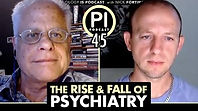
EP 45 | BRUCE E. LEVINE | THE RISE AND FALL OF PSYCHIATRY
Clinical psychologist Dr. Bruce Levine joins Nick for a conversation about historical and modern practices in the field of psychiatry. The conversation is based on Dr. Levine's new book, A Profession Without Reason: The Crisis of Contemporary Psychiatry Untangled and Solved by Spinoza, Freethinking, and Radical Enlightenment.

EP 42 | BEVERLEY THOMSON | EXAMINING ANTIDEPRESSANT HARM
Nick sits with author Beverley Thomson for a conversation about antidepressant drugs. What are the desirable effects of these drugs? What are the adverse effects? Beverley examined this topic extensively to write her book Antidepressed. She shares her knowledge and insight here.

EP 46 | SAMI TIMIMI | INSANE PSYCHIATRY
Dr. Sami Timimi is a practicing child psychiatrist in the UK, but his practice is in direct contrast to the dominant ideology in psychiatry. This insane and horribly problematic ideology is exactly what Dr. Nick and Dr. Sami deconstruct in this important conversation. Dr. Sami’s recent book is entitled Insane Medicine.

EP 40 | PSYCHIATRIC SURVIVOR SHARES HIS STORY
The Psychology Is Podcast has featured authors, journalists, psychologists, and psychiatrists about the problems inherent in modern psychiatry. In this episode, we hear a personal story of a man who endured unnecessarily pathologizing diagnoses and damaging, ongoing drug prescriptions, and how he was able to free himself from the harm of modern psychiatric practices.

EP 35 | ANOOP KUMAR | RETHINKING HUMAN NATURE FOR MEDICINE'S SAKE
Medical Doctor Anoop Kumar joins Nick Fortino on the 35th episode of the Psychology Is Podcast for a conversation about human nature, and how a more complete understanding of the human body will enhance our capacity to practice medicine effectively.

EP 26 | LASANA HARRIS | SOCIAL COGNITION AND DEHUMANIZATION
Dr. Lasana Harris joins us on the 26th episode of the Psychology Is Podcast for a conversation about social cognition, the flexible use of social cognition, and the psychology of dehumanization and anthropomorphism.

EP 25 | KENT BERRIDGE | NEUROPSYCHOLOGY OF ADDICTION AND EMOTION
Dr. Kent Berridge is one of the most impactful scholars in psychology. He is a professor of psychology and neuroscience at the University of Michigan. In the 25th episode of the Psychology Is Podcast, Dr. Berridge shares his expertise about the neuropsychology of addiction and emotion. We discuss his idea of incentive salience as applied to addiction, and the difference between liking something and wanting something. We also discuss affective valence, and the neurological correlates of high and low valence brain states. Enjoy the conversation!

EP 13 | PETER GØTZSCHE | CRITICAL CONVERSATION ABOUT PSYCHIATRY
Dr. Peter Gøtzsche joins psychologist Nick Fortino on the 13th episode of the Psychology Is Podcast. This conversation focuses on the problems with current practices in psychiatry, the terribly adverse effects of psychiatric drugs, how to withdraw from these drugs, the death of the chemical imbalance hypothesis, and the paradigm shift we need to more accurately understand emotional pain.

EP 9 | JOANNA MONCRIEFF | WHAT YOU NEED TO KNOW ABOUT PSYCHIATRY
Millions of people are prescribed psychiatric drugs each year, but few understand how these drugs actually affect the brain. Psychiatrist Joanna Moncrieff joins psychologist Nick Fortino on Psychology Is in this important conversation about how people think these drugs work and how they actually work.

EP 5 | ROBERT WHITAKER | PSYCHIATRIC DRUGS & MENTAL DISORDERS
Author of Anatomy of an Epidemic and journalist Robert Whitaker speaks about mental disorders and psychiatric drugs. Robert and Nick discuss the dramatic discrepancy between evidence and practice in psychiatry, and what role these drugs have in the effort to improve mental health in society.